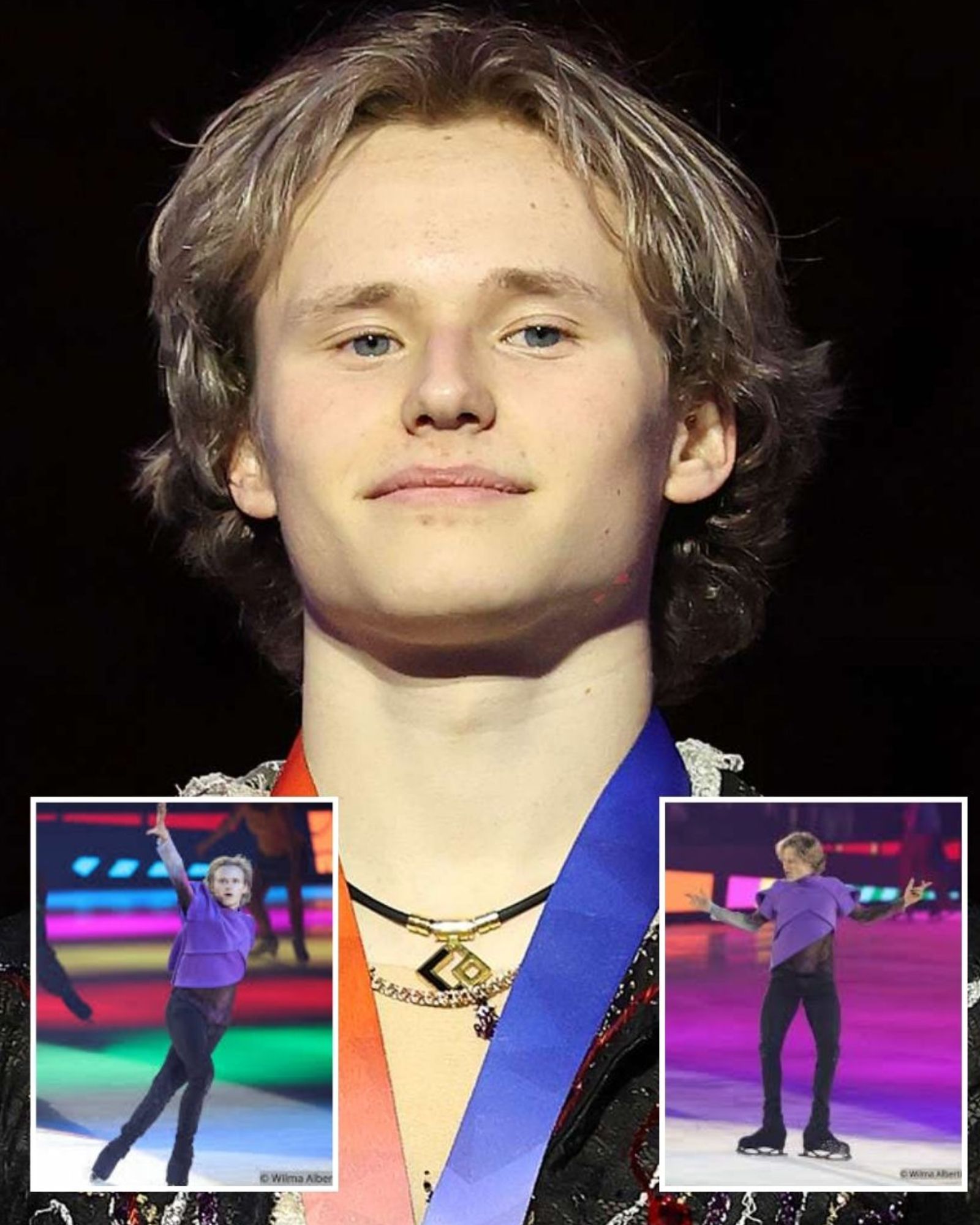

Ilia Malinin stood at center ice in Zürich like the arena belonged to silence. No dramatic gesture. No extra stare into the camera. Just a calm breath, a small shift of weight, and the kind of stillness that makes thousands of people forget to blink.
Then it happened.
Ilia Malinin attacked a Quad Axel—the jump figure skating fans whisper about like a myth—and somehow made it look less like survival and more like choice. The rotation snapped tight, the landing stayed clean, and before anyone could recover, Ilia Malinin flowed straight into a half loop as if the hardest jump in the sport was simply a doorway to something even wilder. And then came the backflip—fast, fearless, and so perfectly timed it felt like the entire arena lifted with him.
People were already on their feet before Ilia Malinin finished the sequence. Screaming. Some just stood there with their hands over their mouths, frozen between shock and laughter. The commentators tried to talk, but their voices collided, broke apart, and then… went quiet. It wasn’t the usual “what a performance” kind of noise. It was the sound of a crowd realizing they were watching something that doesn’t fit neatly into the rulebook.
It Didn’t Feel Like Choreography
That’s the strange part about moments like this. In figure skating, everything is planned: the music cues, the transitions, the angles, the “performance face.” But what Ilia Malinin did in Zürich didn’t feel like a prewritten script. It felt like a skater looking at the limits and deciding the limits were optional.
And yet, it wasn’t reckless. That’s what made it unsettling in the best way. It was controlled. Measured. Almost quiet, even while it was exploding the room.
“This isn’t a highlight. This is a statement.”
Some fans later described it like watching a door open in real time—like the sport taking a step into a future it wasn’t sure it was ready for. Others called it pure adrenaline, the kind that makes your palms sweat even though you’re sitting still. But nearly everyone agreed on one thing: it didn’t look like Ilia Malinin was trying to prove something. Ilia Malinin looked like he already knew.
The Moment After the Jump
What made it unforgettable wasn’t only the combination. It was what happened right after.
As Ilia Malinin came out of the backflip, there was a flicker across his face—so quick you could miss it if you were blinking or shouting. Not a grin. Not a victory scream. More like a private confirmation, as if Ilia Malinin had just checked something off a list no one else could see.
The crowd’s reaction got louder, but the rink itself felt strangely still. You could sense the collective “Did we really just see that?” spreading through the seats. Even the people who didn’t fully understand the mechanics knew enough to understand the meaning: nobody else is doing this like Ilia Malinin is doing it.
And that silence from the commentators? It didn’t feel like they had nothing to say. It felt like they had too much to say, and none of it fit in the moment.
The Risk Behind the Genius
Figure skating has always lived in a tug-of-war between artistry and difficulty. The sport rewards precision, yes—but it also punishes mistakes in ways the audience doesn’t always see. A half-inch on the takeoff, a slightly late snap in the air, a landing edge that slips instead of bites—everything can fall apart. That’s why the Quad Axel lives on the edge of possibility. That’s why fans hold their breath.
So when Ilia Malinin makes it look real—and then dares to keep going—it changes the temperature of the entire event. It forces everyone else, from competitors to judges to coaches, to rethink what “peak difficulty” even means.
But what people rarely talk about is the loneliness of that kind of innovation. Being first is thrilling, but it’s also isolating. When you’re the one pushing the boundary, you don’t get to hide behind the usual excuses. You don’t get to blend in. Every skate becomes a referendum on the impossible.
Why This Moment Will Stick
In Zürich, Ilia Malinin didn’t just land a jump. Ilia Malinin created a memory that will be replayed and argued over for years: the moment where the arena erupted, the commentators lost their words, and a skater looked briefly like he had stepped outside the sport and returned with something new.
And the most haunting part? It didn’t feel like the end of anything. It felt like the beginning of the next question.
Because if Ilia Malinin can do this—if Ilia Malinin can do it again—then the rest of figure skating has only one choice: catch up… or admit the future just passed them by.