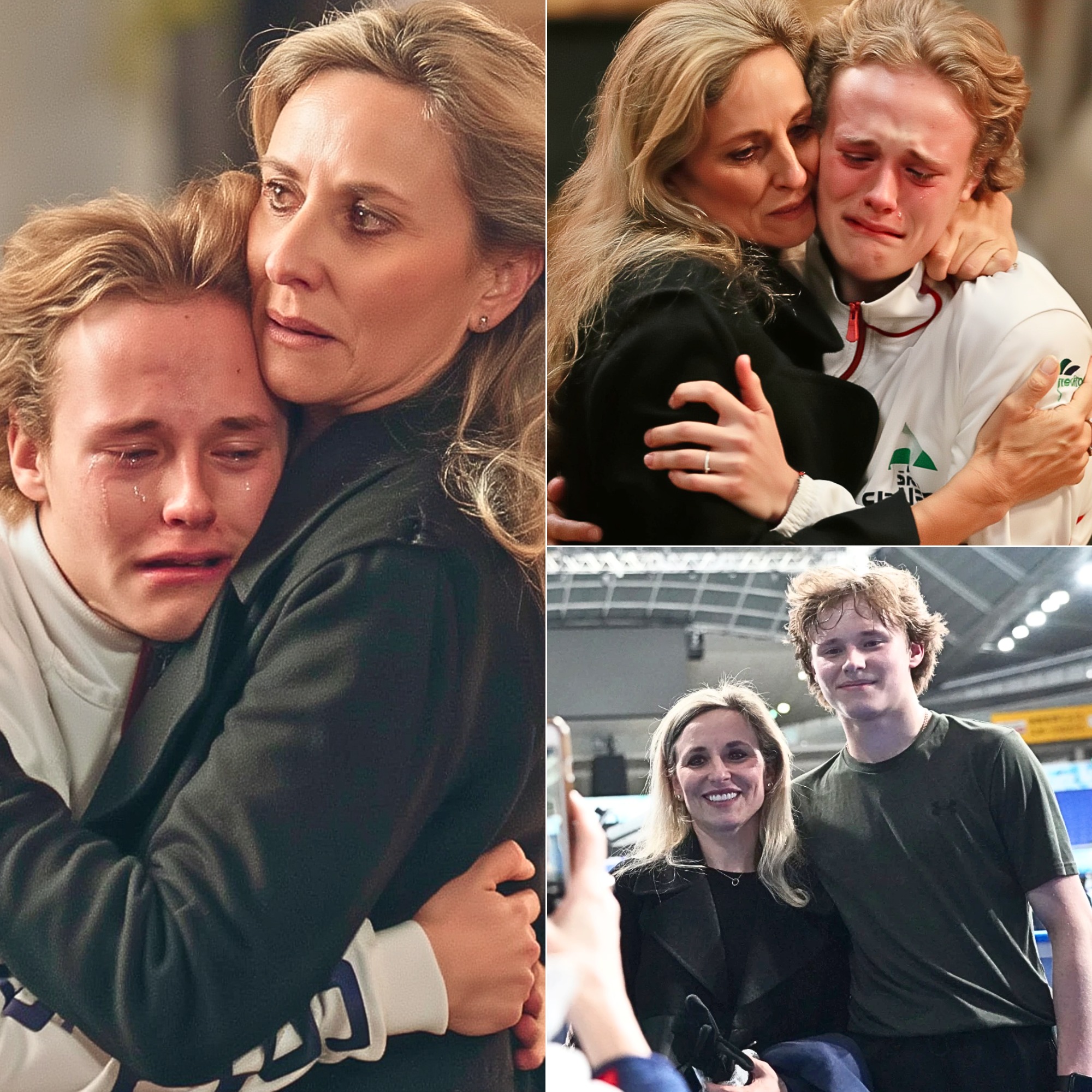

he ice was silent, but the pain echoed louder than any score. After Ilia Malinin‘s shocking free skate meltdown — falls on quads, missed elements, and a plunge from gold favorite to 8th place overall (264.49 points, behind Kazakhstan’s Mikhail Shaidorov’s gold at 291.58) — the “Quad God” wasn’t the only one broken.

His mother, Tatiana Malinina (former Olympian, coach, and constant support), finally let the dam break in emotional interviews and family statements circulating post-event. Fighting tears, she spoke of the invisible side of greatness: endless late-night training sessions where Ilia came home drained, quiet self-criticism masking deeper exhaustion, and a 21-year-old absorbing brutal online criticism without complaint. She described him carrying not just technical pressure, but the weight of a nation’s expectations — all while hiding his own struggles.

“My son gave up his youth, his dreams, and his inner peace… for our family — and for the United States,” she said, voice cracking. “The world saw the jumps and scores… they didn’t see the quiet toll behind closed doors.” Her words went viral on social media, reminding everyone that behind the quads and records lies a human story — one of sacrifice that suddenly made any medal feel hollow.
Tatiana, who notoriously avoids watching Ilia live (due to overwhelming nerves — she waits for her husband Roman Skorniakov to call with results, then watches days later) — was reportedly back in Virginia during the individual final. But the news hit hard. Family videos and posts showed her emotional support, emphasizing pride “not because you win, but because of who you are.”
Then came Ilia’s own raw confession. In post-event interviews and social media (including a poignant video juxtaposing triumphs with his head-in-hands moment), he admitted the pressure overwhelmed him: “I blew it… There’s no way that just happened.” He spoke of nerves flooding traumatic memories in his starting pose, the “insurmountable” spotlight, and later addressed “vile online hatred” while hinting at mental health struggles — posts like “Sometimes I wish something bad would just happen to me so I don’t have to do it myself” (later removed, replaced with “Everything will be ok”).
The arena — and the world — fell silent. Fans flooded comments with support: “This is why we need to protect our athletes” and “Medals don’t define him — his heart does.” Even Simone Biles reached out in solidarity, drawing from her own “twisties” experience.
Malinin still leaves Milano with team event gold (his first Olympic medal), but this individual disappointment exposed the brutal truth: Even “gods” on ice are human. His mom’s tears and his trembling admission? A reminder that the real victory is surviving the weight — and coming back stronger.